Walkthrough · readers
Day to day, from first sign-in to the loop the app is built around
Normal user experience, from signing in, finding something, following it, and being told when it moves. Every screen below is what an ordinary account sees.
1. Signing in
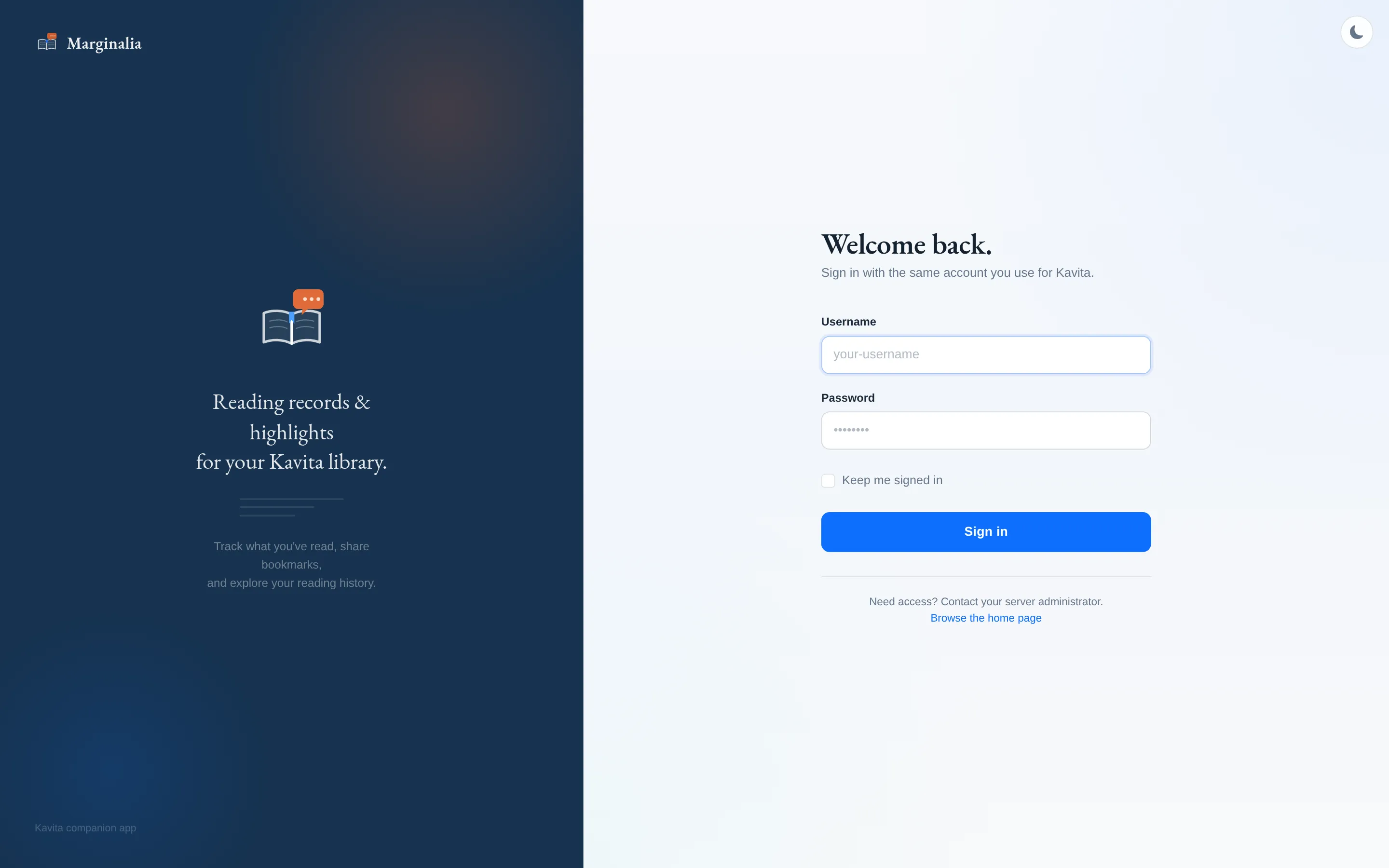
There is no account to create. Marginalia checks the password against Kavita's own user table, so whatever gets you into Kavita gets you in here on the first try. If your server hands sign-in to an identity provider, a Sign in with … button appears above the password form instead.
2. Landing on Browse
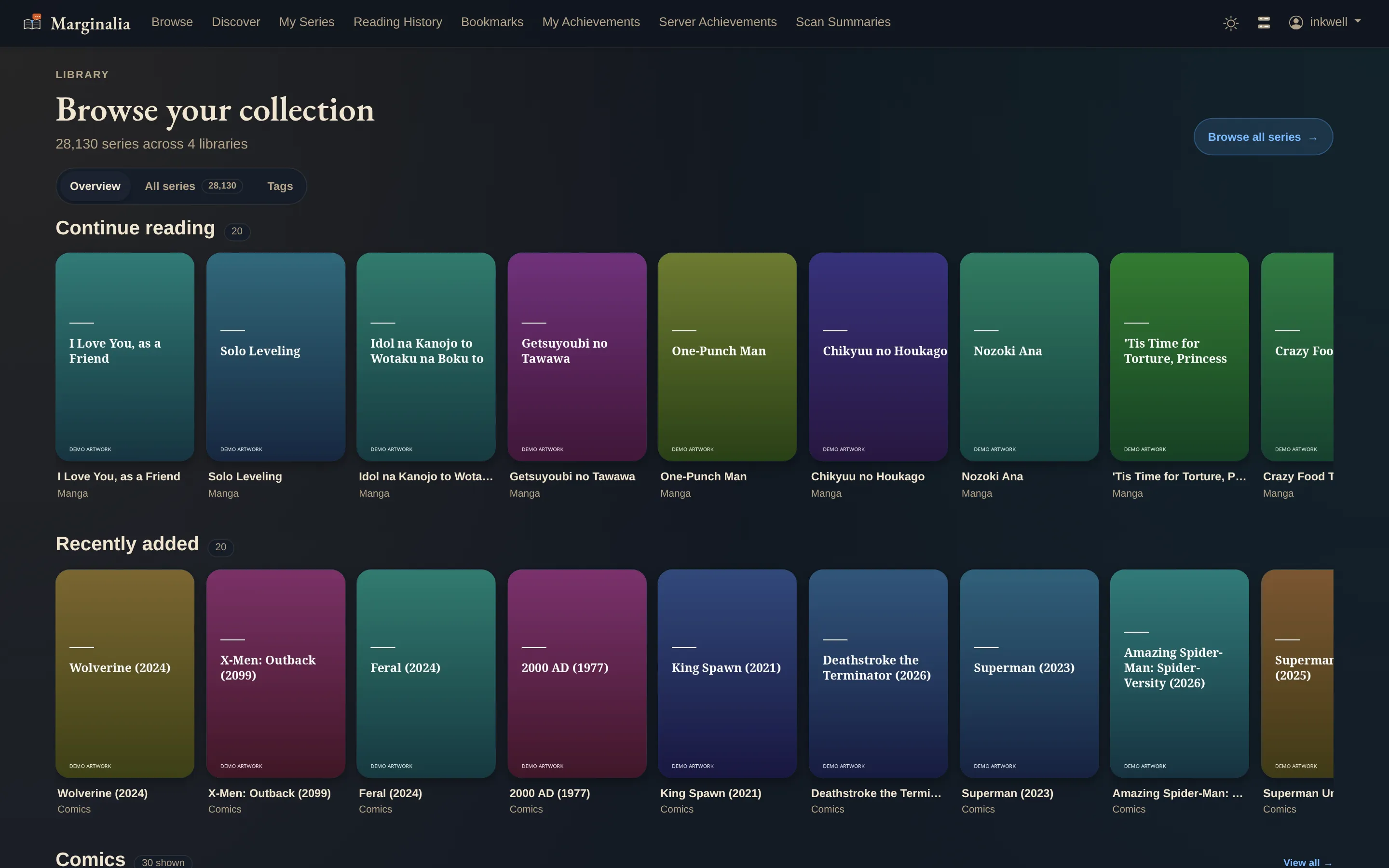
You arrive at your whole collection, shelved rather than dumped into one flat grid. Continue reading comes first, then recently added, then a shelf per library. Card sizes vary by shelf on purpose, so the page has a shape instead of being a wall.
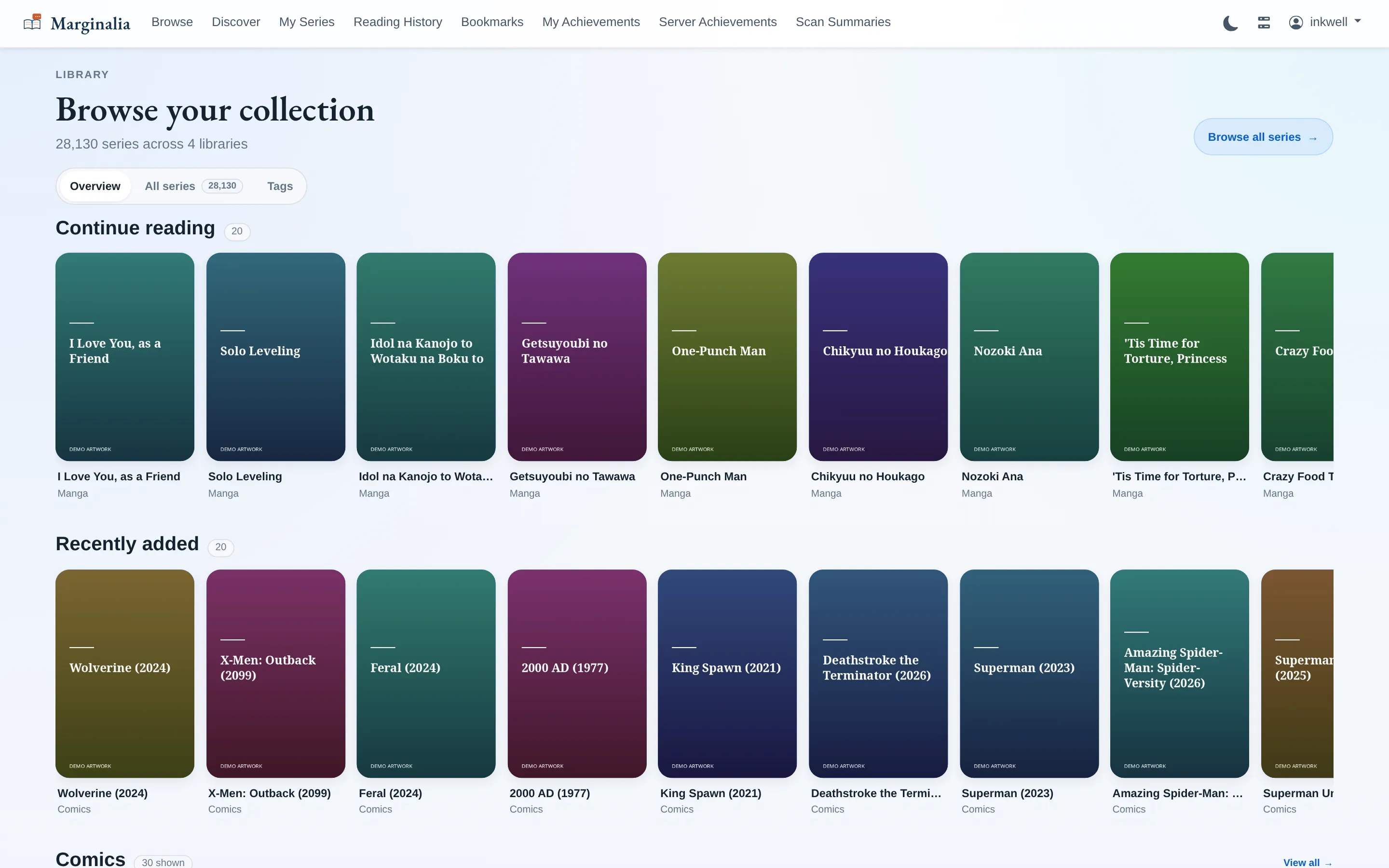
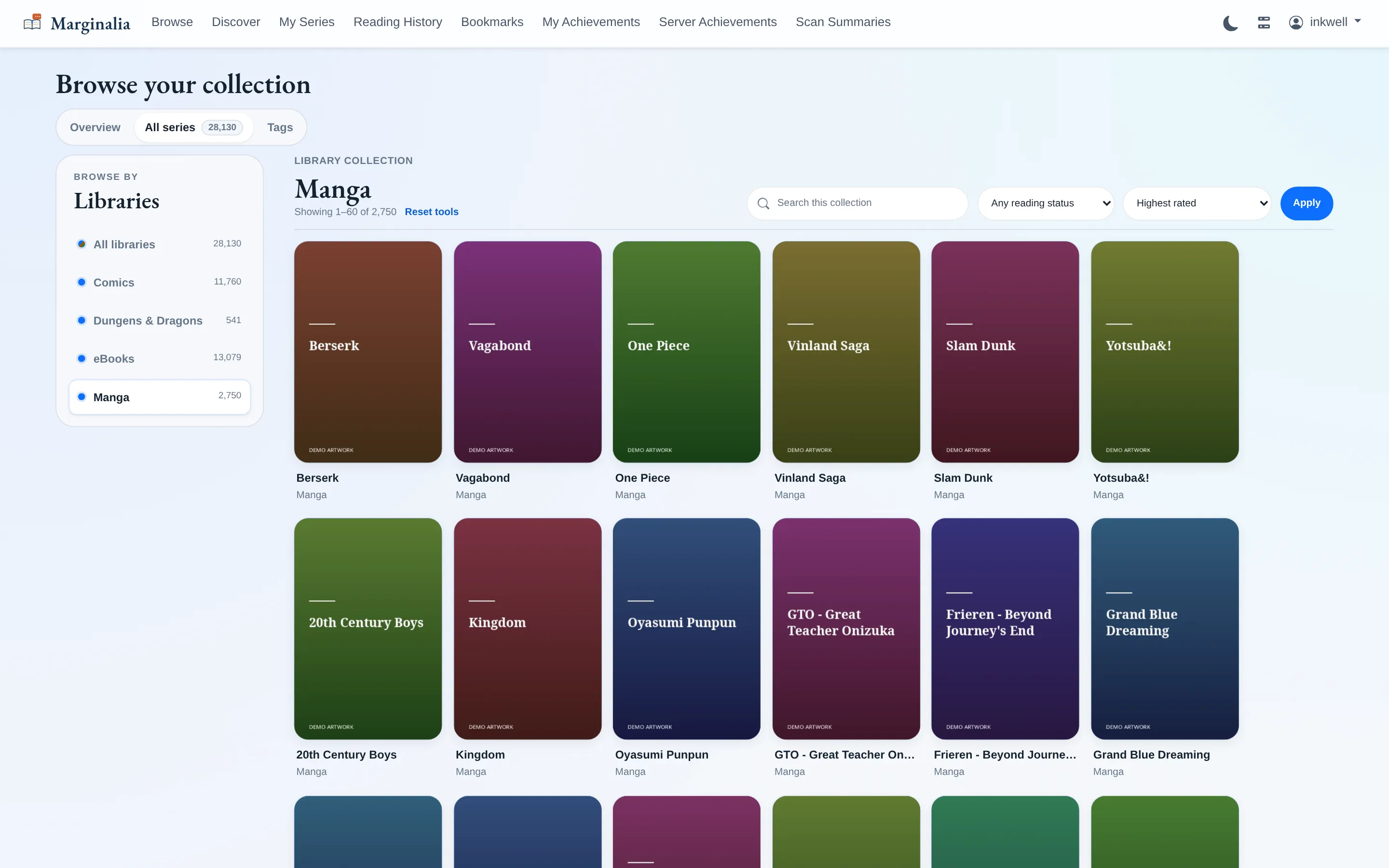
Shelves are for picking something up again. When you would rather just wander, the All series tab drops the shelving and gives you one library at a time.
3. Tag Browser
The Tags view turns everything Kavita and MangaBaka know about your library into a browsable index — genres, activities, demographics, character archetypes — each with a count of how many series you actually own under it.
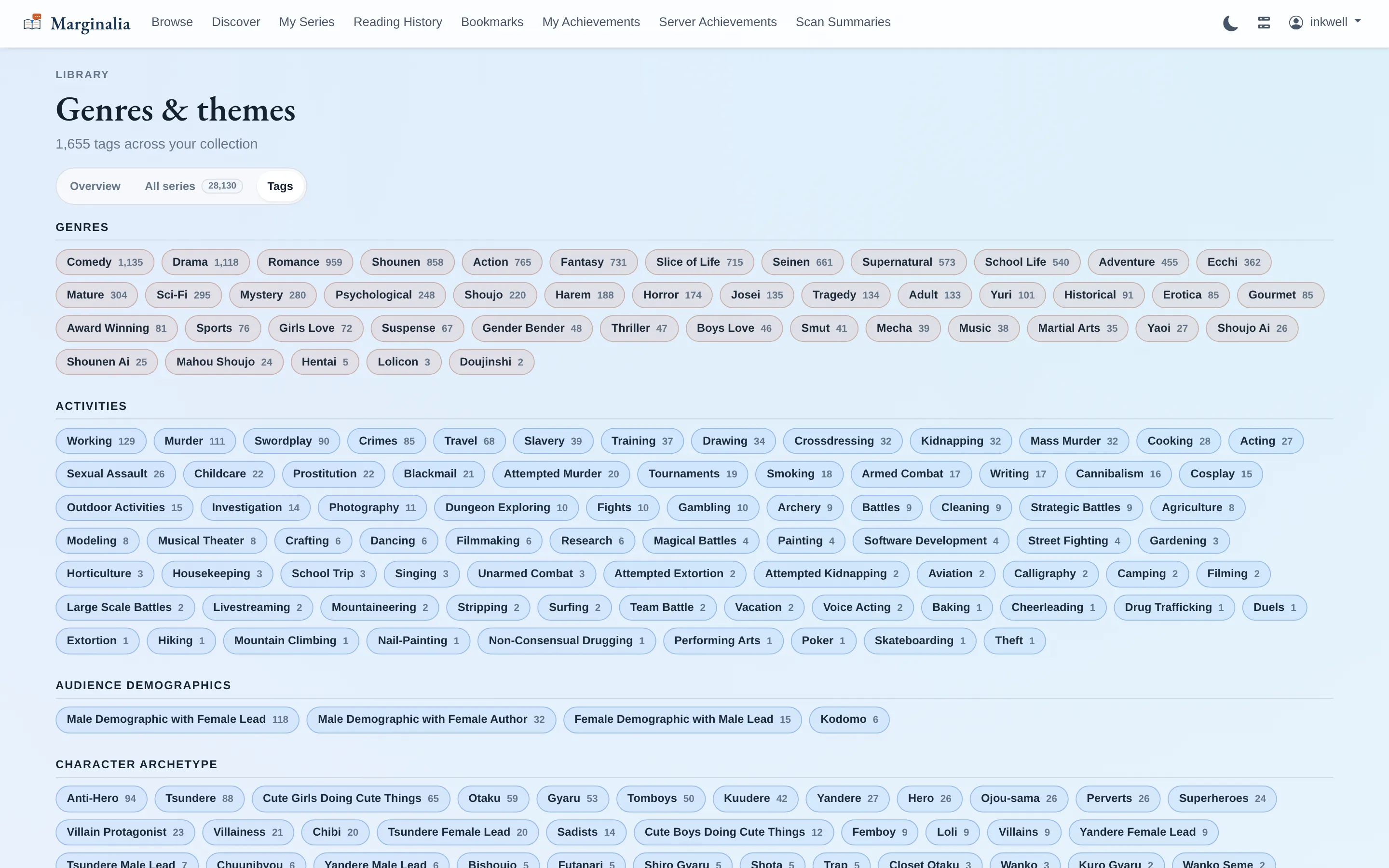
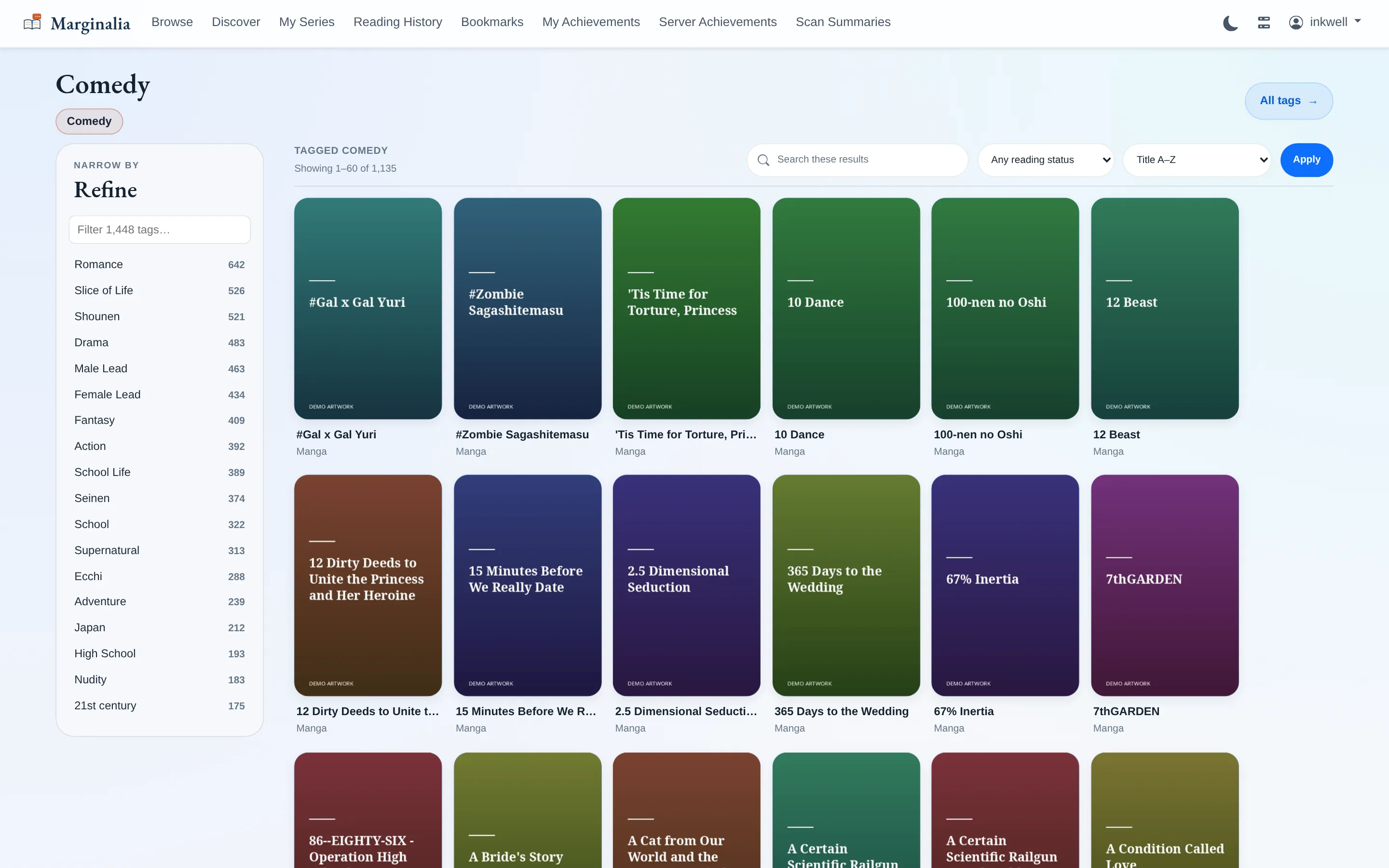
Picking one drills through to just those series, and tags combine — so you can narrow to the intersection rather than starting over from a single-tag list.
4. The series page
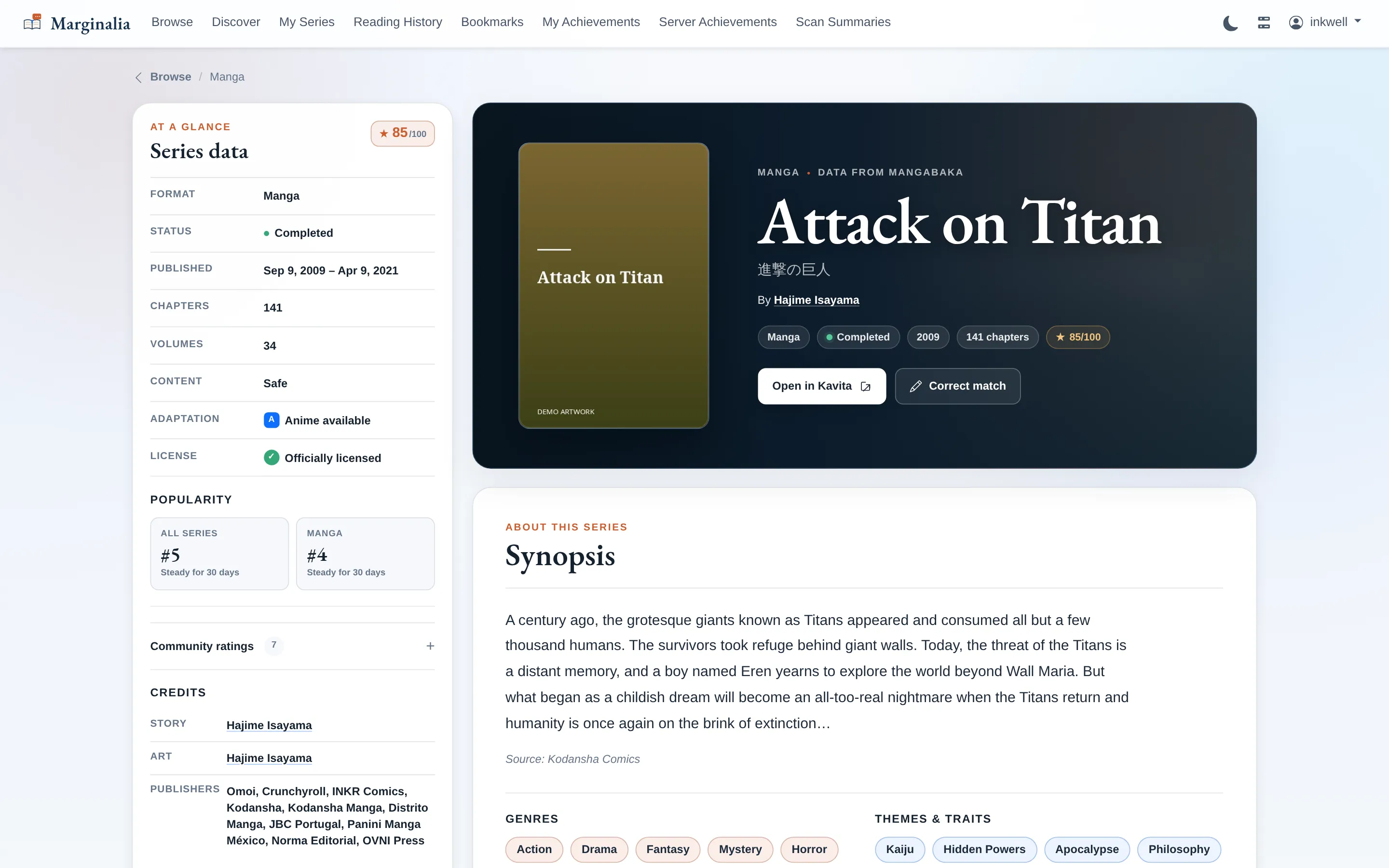
Everything known about one series in a single view: your progress, the metadata Marginalia matched from MangaBaka, community ratings, credits, and where it sits in the catalogue's popularity ranking.
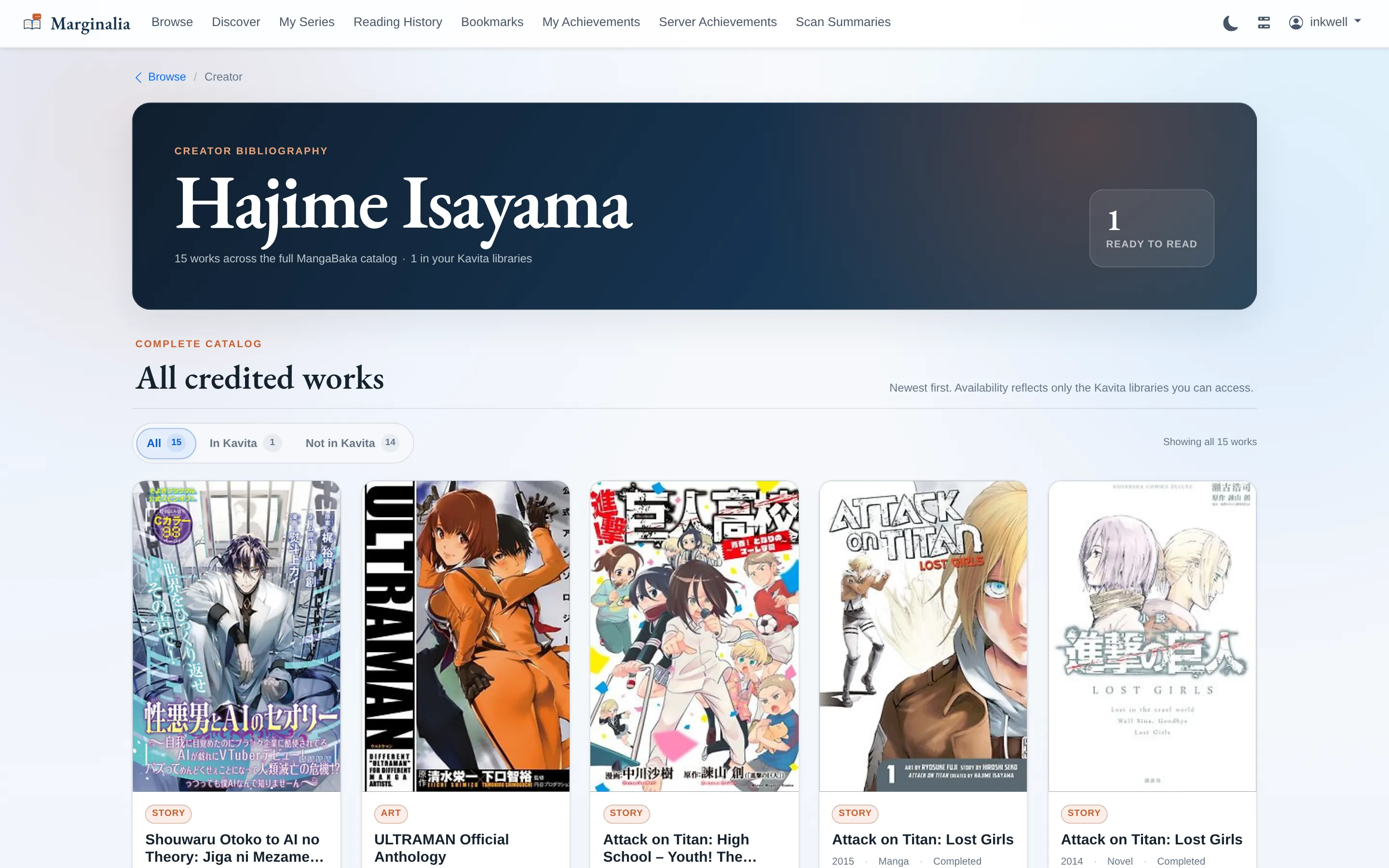
Creator names are links. Following one gives you their full bibliography — every credited work in the metadata catalogue, with the ones already sitting on your server marked as such.
5. Following a series
This is the loop the app is built around. My Series lists everything you have in progress; the Watch toggle on a row is the whole subscription mechanism.
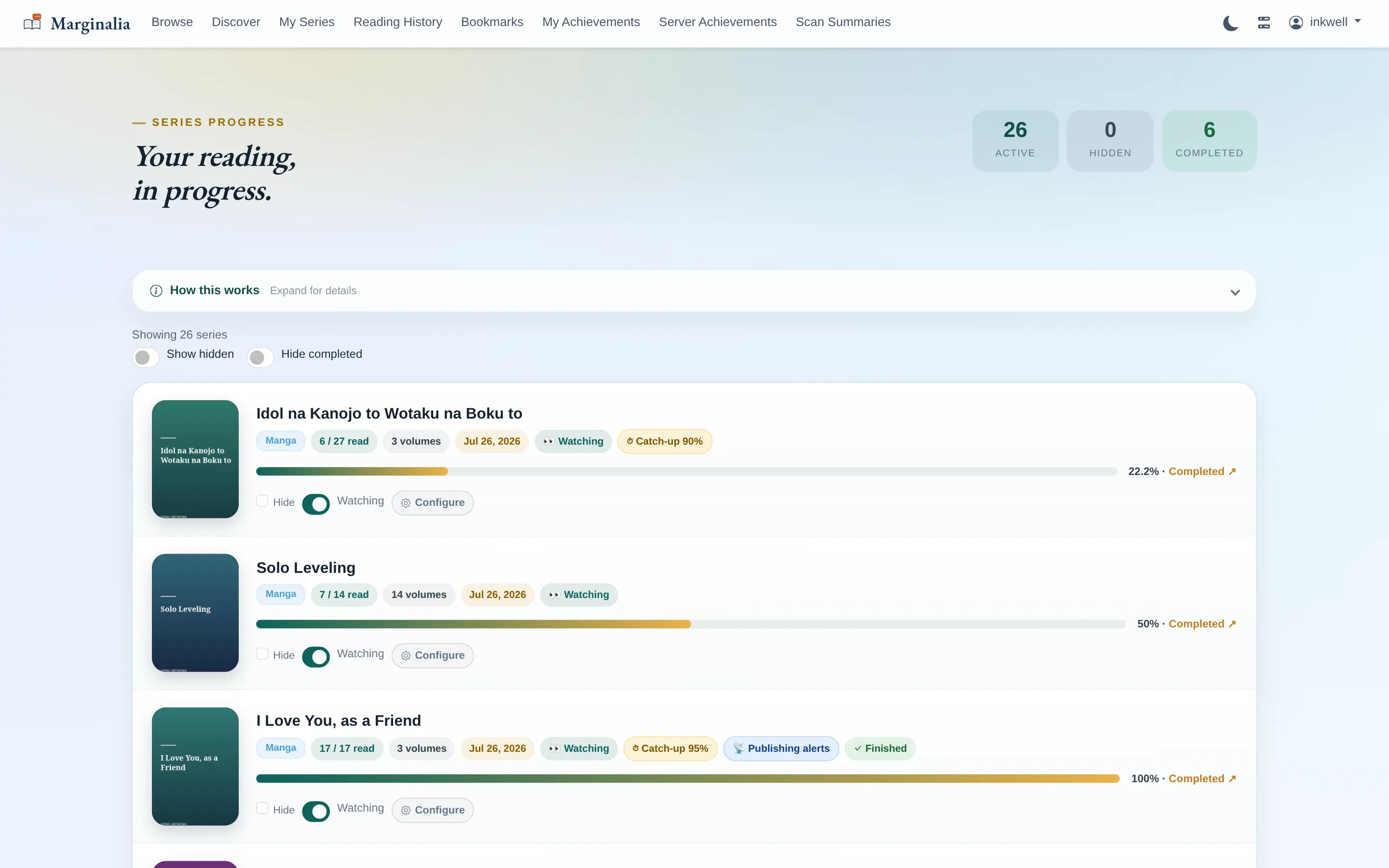
Catch-up reminders are the setting worth understanding. Setting a threshold records where you are now and then says nothing. It pings you later, once enough new chapters have landed that your completion has fallen back to that number. It is for series you would rather binge than read one chapter at a time.
6. Deciding what reaches you
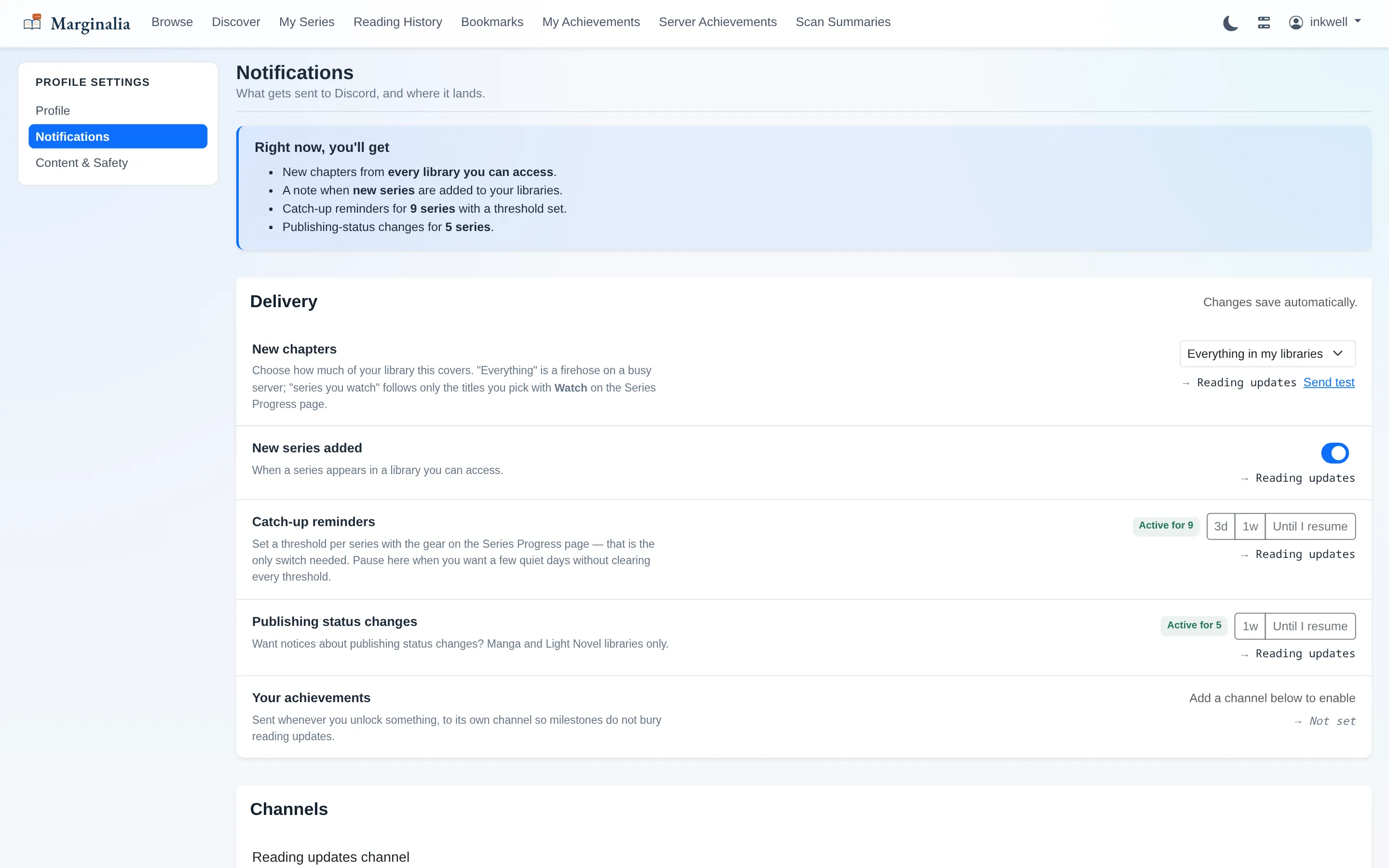
Notification settings open with a plain-English summary of what you are currently signed up for, so you never have to reverse-engineer it from a column of switches.
7. Finding the next thing
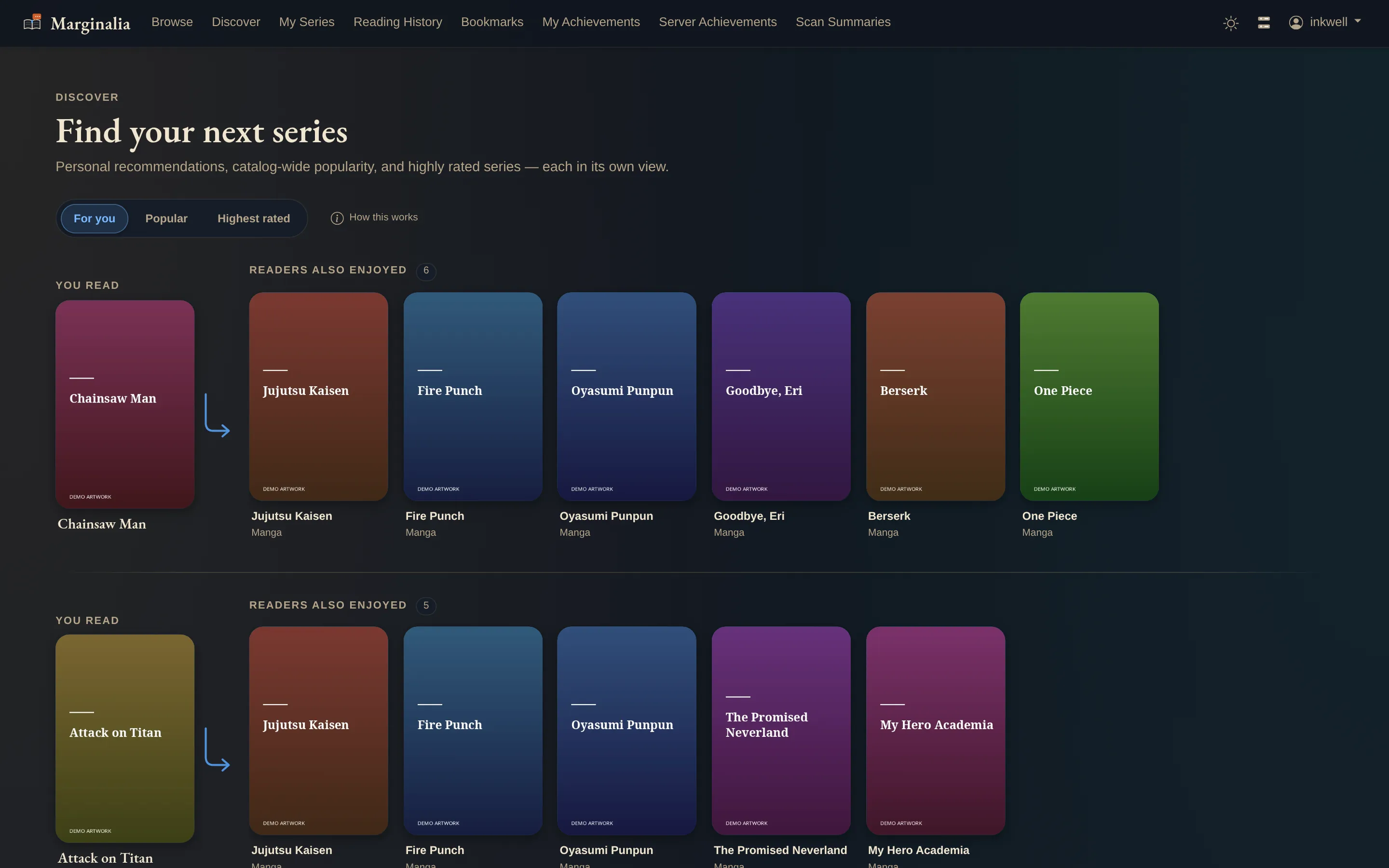
Discover works from what you have actually been reading. Each row starts from one of your series and shows what MangaBaka readers of that series also enjoyed — then filters the result down to series already on this server that you have not started. The series that get listed here are refreshed every 24 hours.
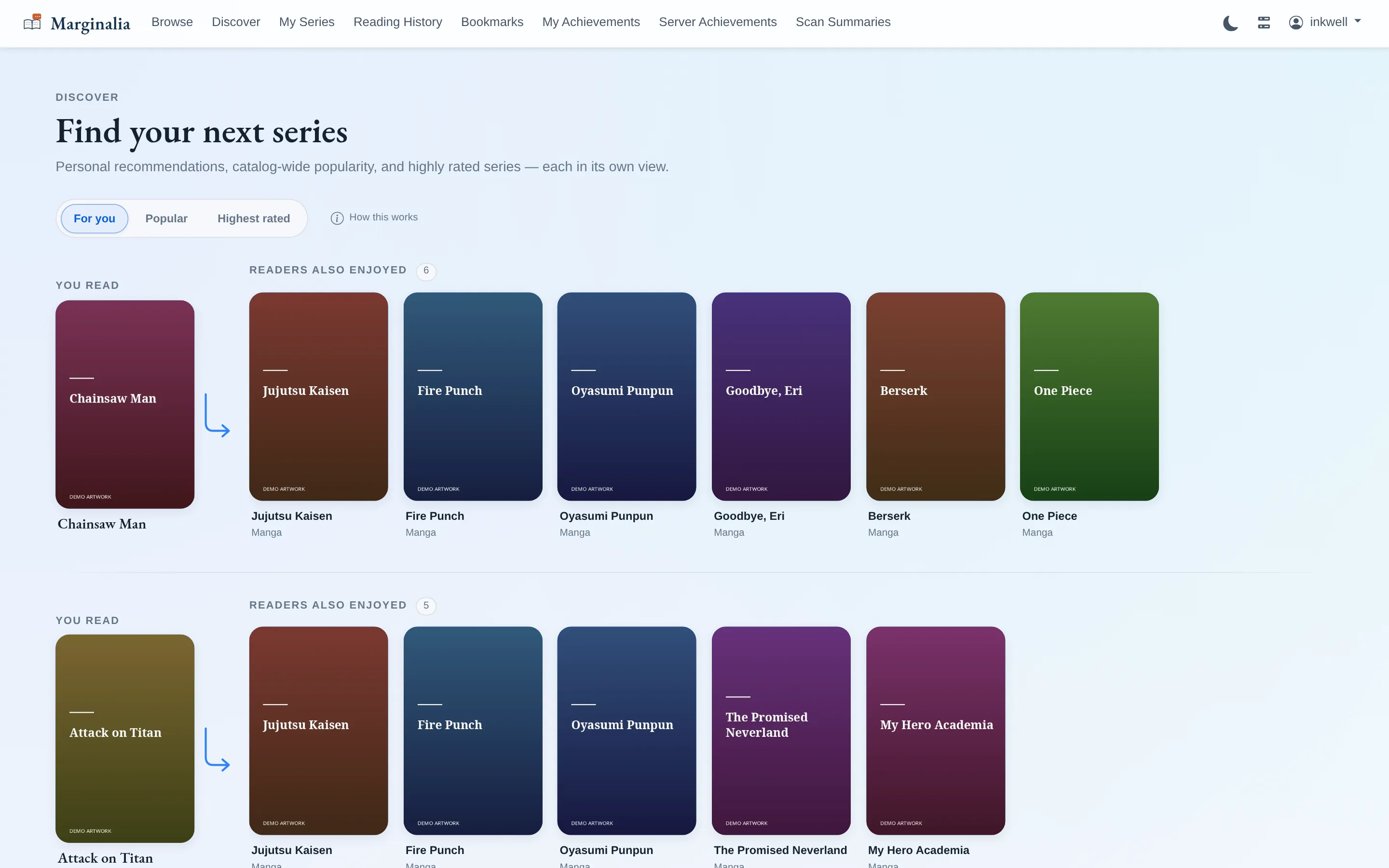
What leaves your server: the recommendation lookups are made by the server against MangaBaka and carry manga IDs only — never your account or your reading. Covers and titles on this page come from your own library, so your browser never talks to MangaBaka at all. An admin can switch the whole hub off.
8. What you have already read
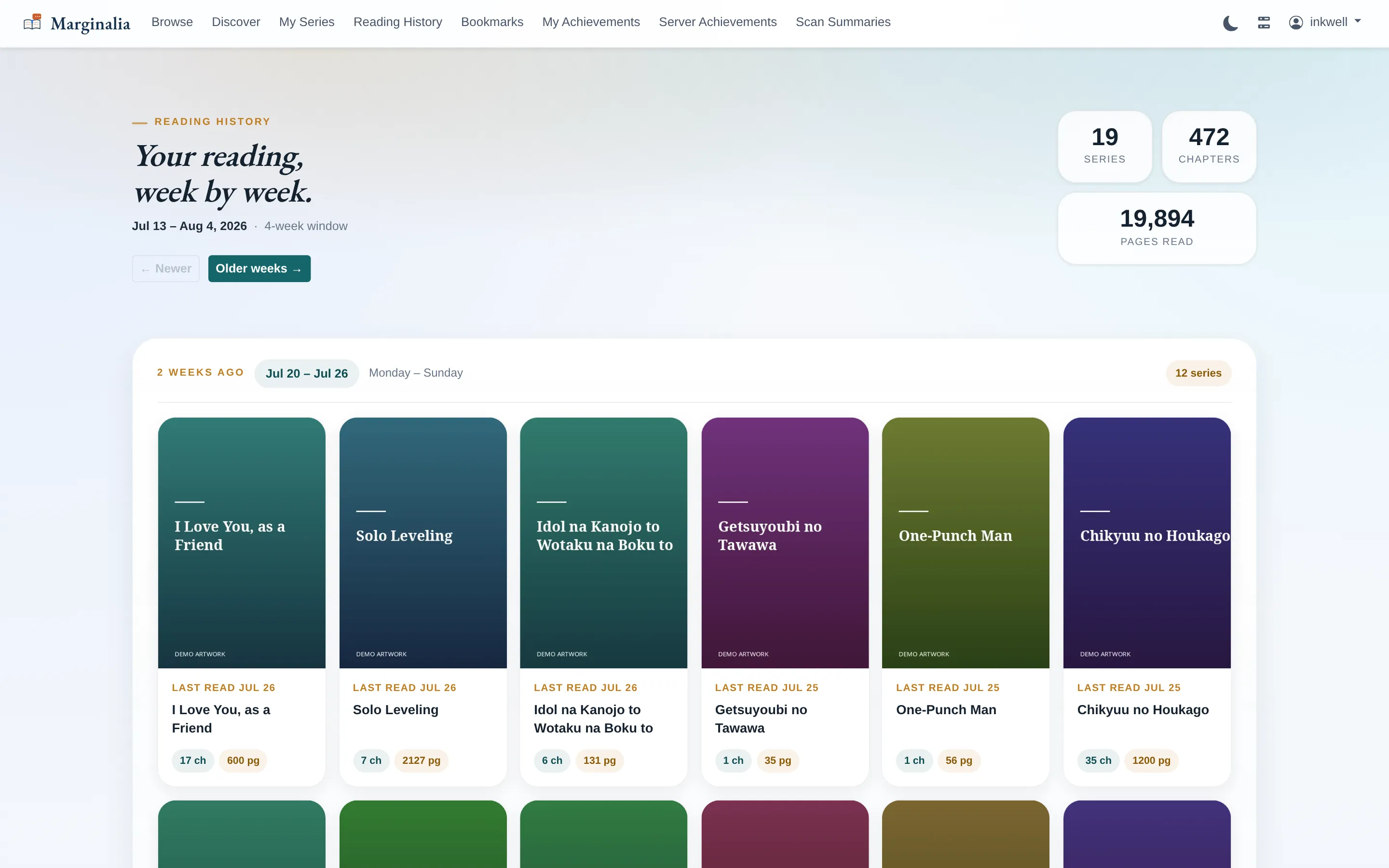
Reading history is week by week, paginated backwards, counting chapters and pages per series. It makes "how much did I actually read last month" a question with an answer.
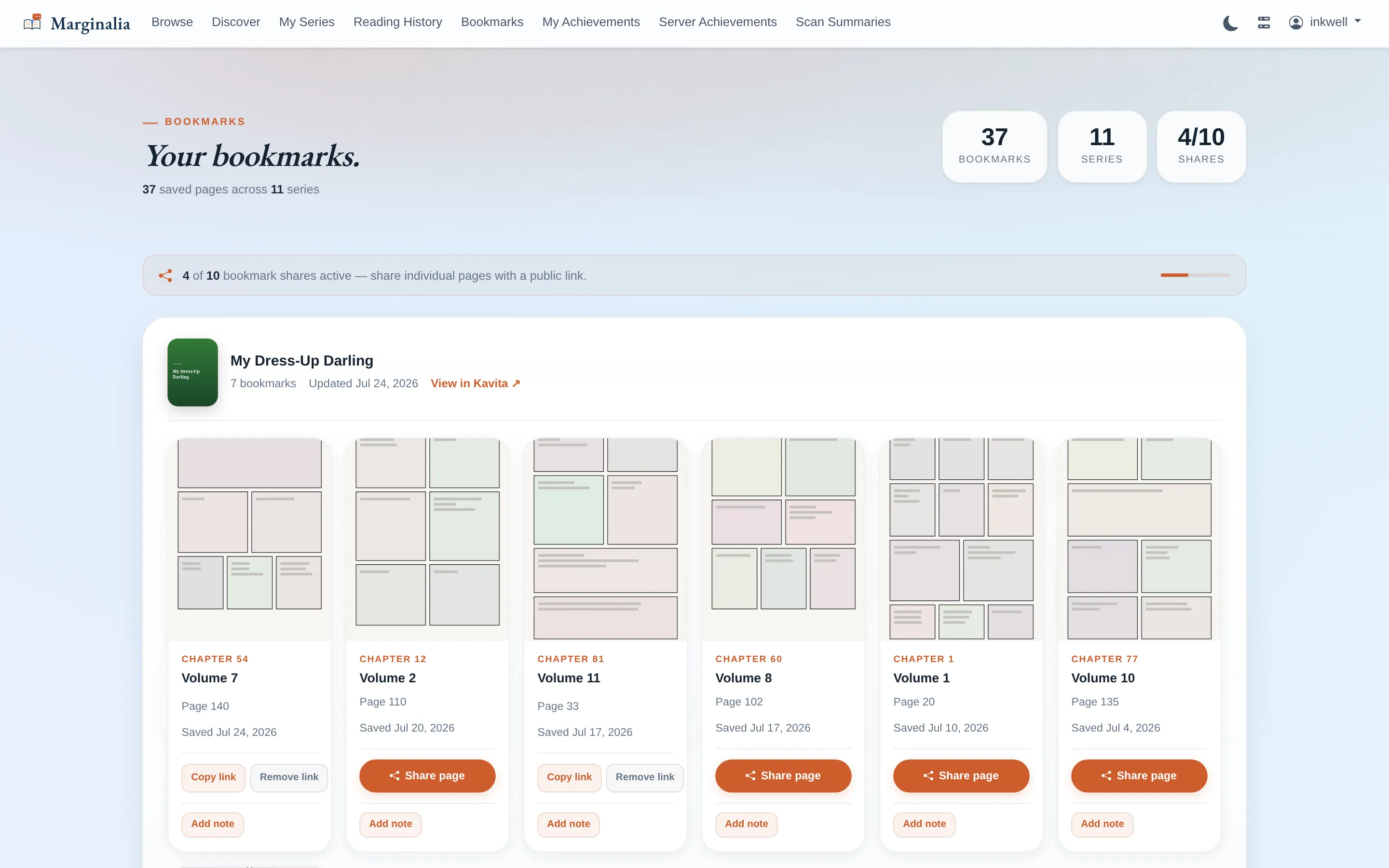
Bookmarks is the gallery of pages you saved while reading — grouped by series, each reopening at full size, each able to carry a Markdown note.
9. Achievements
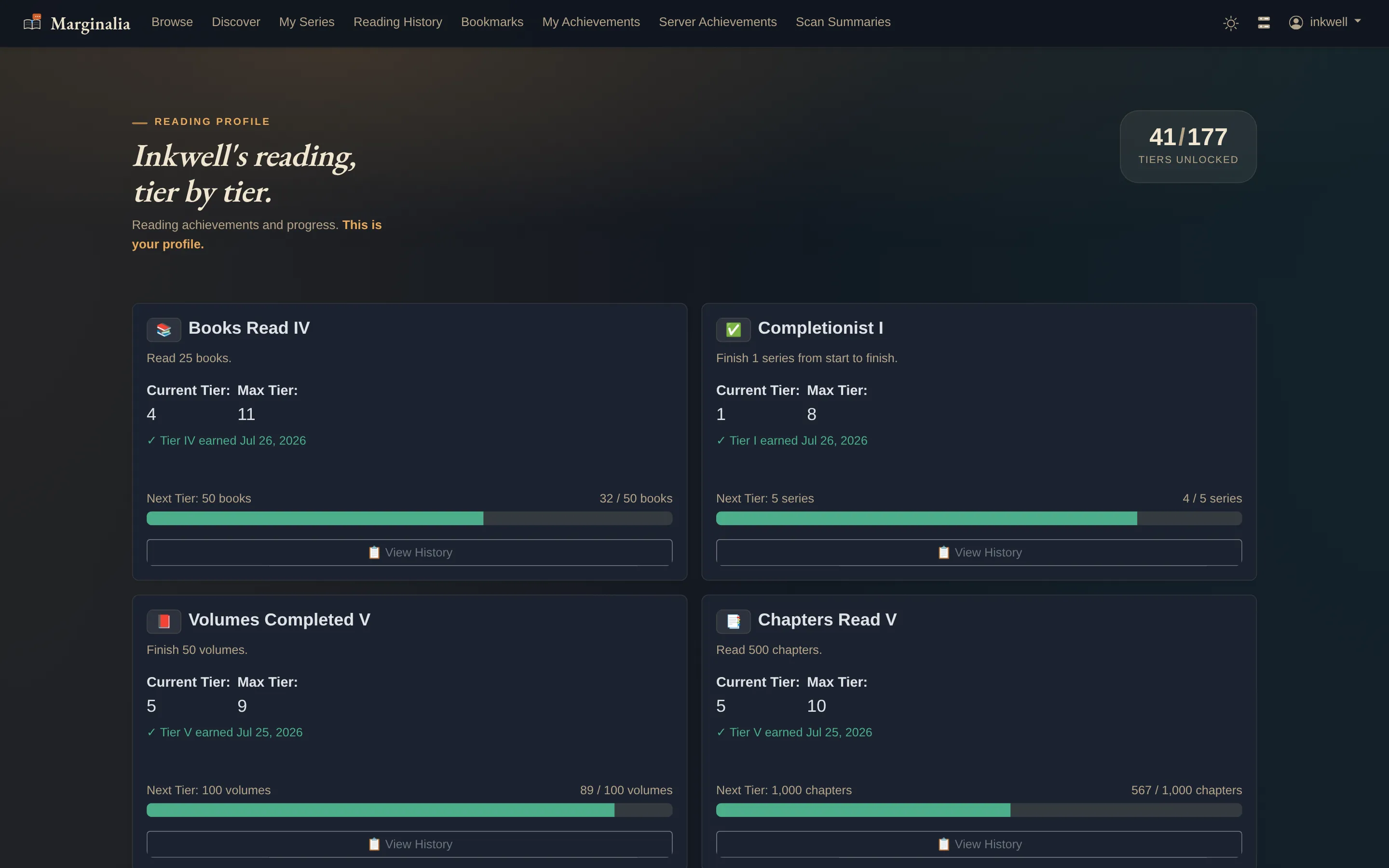
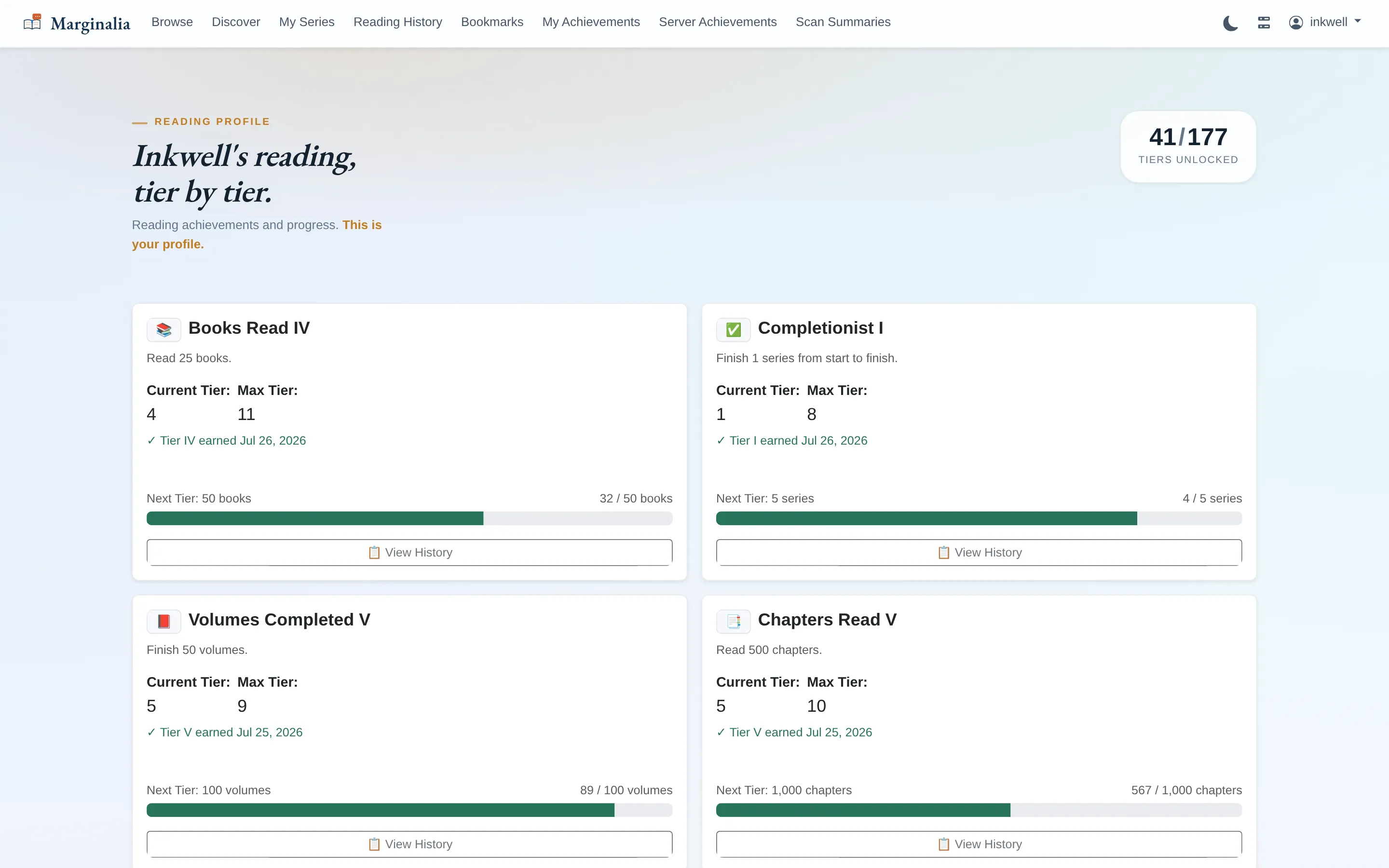
Tiered families rather than one-shot badges. Each card shows the tier you are on, the next threshold, and how far along you are — so a card is a progress bar, not a lottery ticket.
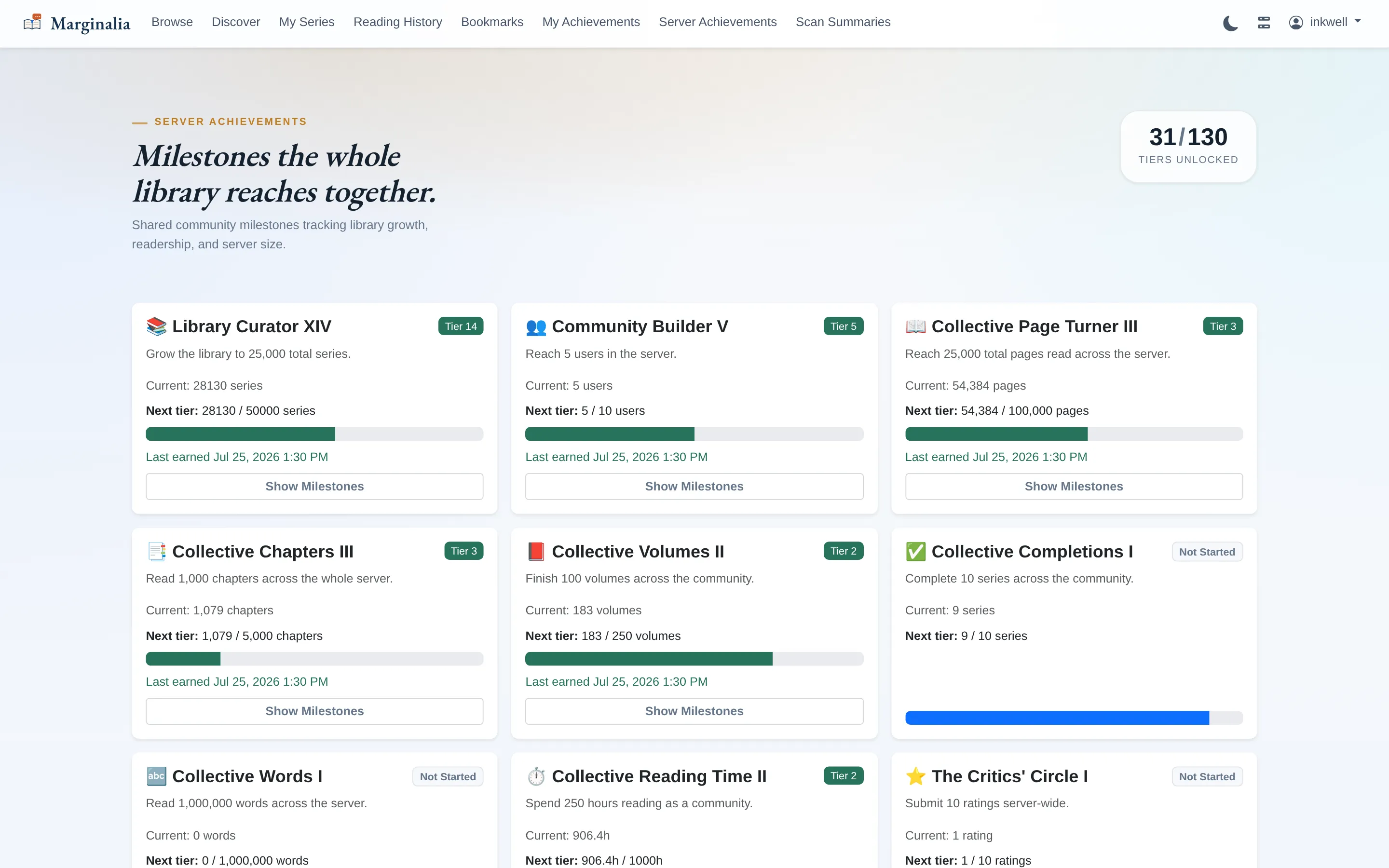
If more than one person reads off the server, there is a shared set everyone contributes to.
10. Two settings worth knowing about
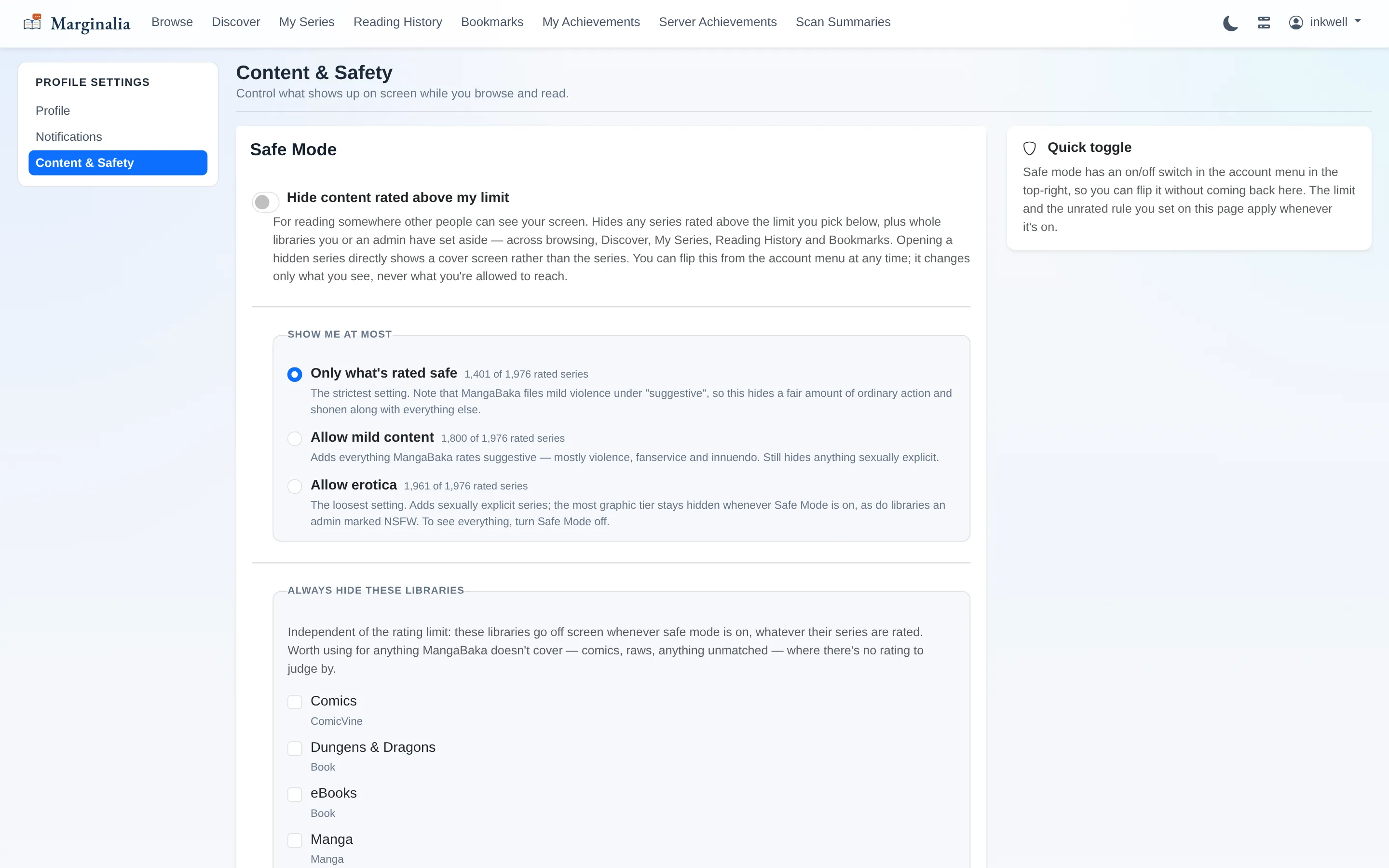
Safe Mode is for reading somewhere other people can see your screen. You pick a content ceiling and optionally whole libraries to hide, and it applies across browsing, Discover, My Series, history and bookmarks.
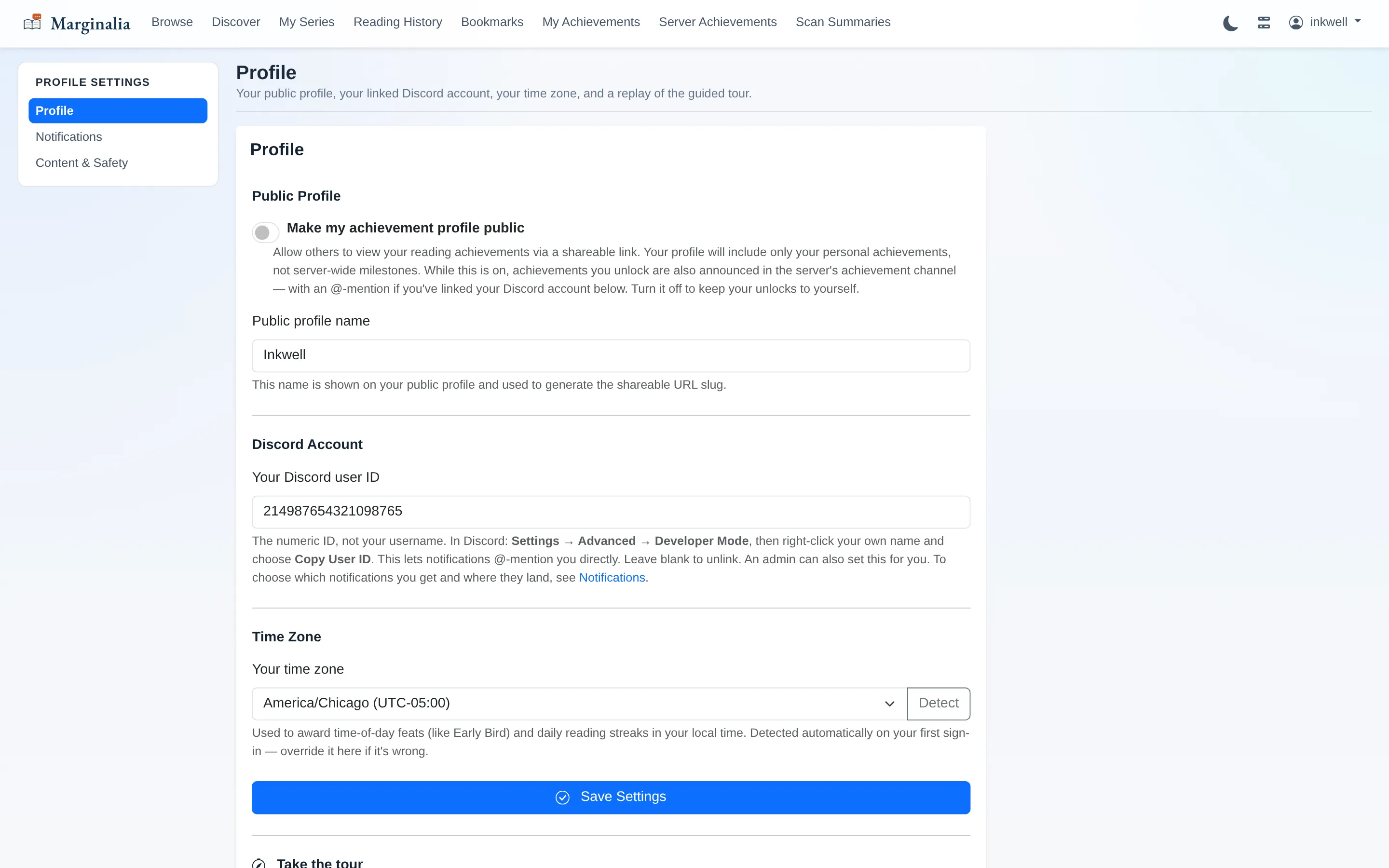
The profile page holds the rest: your public profile, the Discord ID that lets notifications @-mention you, and the timezone your streaks and time-of-day feats are judged in.
Dark mode
Not a filter laid over the light theme — the palette is remapped, and it is the same set of design tokens either way. Toggled from the navbar, remembered per browser, with no flash of the wrong theme on load.